Website Redesign Services: When It's Worth It (and What You Should Get)
Not every site needs a full redesign. An honest look at when it's worth it, what a redesign should actually get you, and what tends to go wrong — from a team that answers the phone.
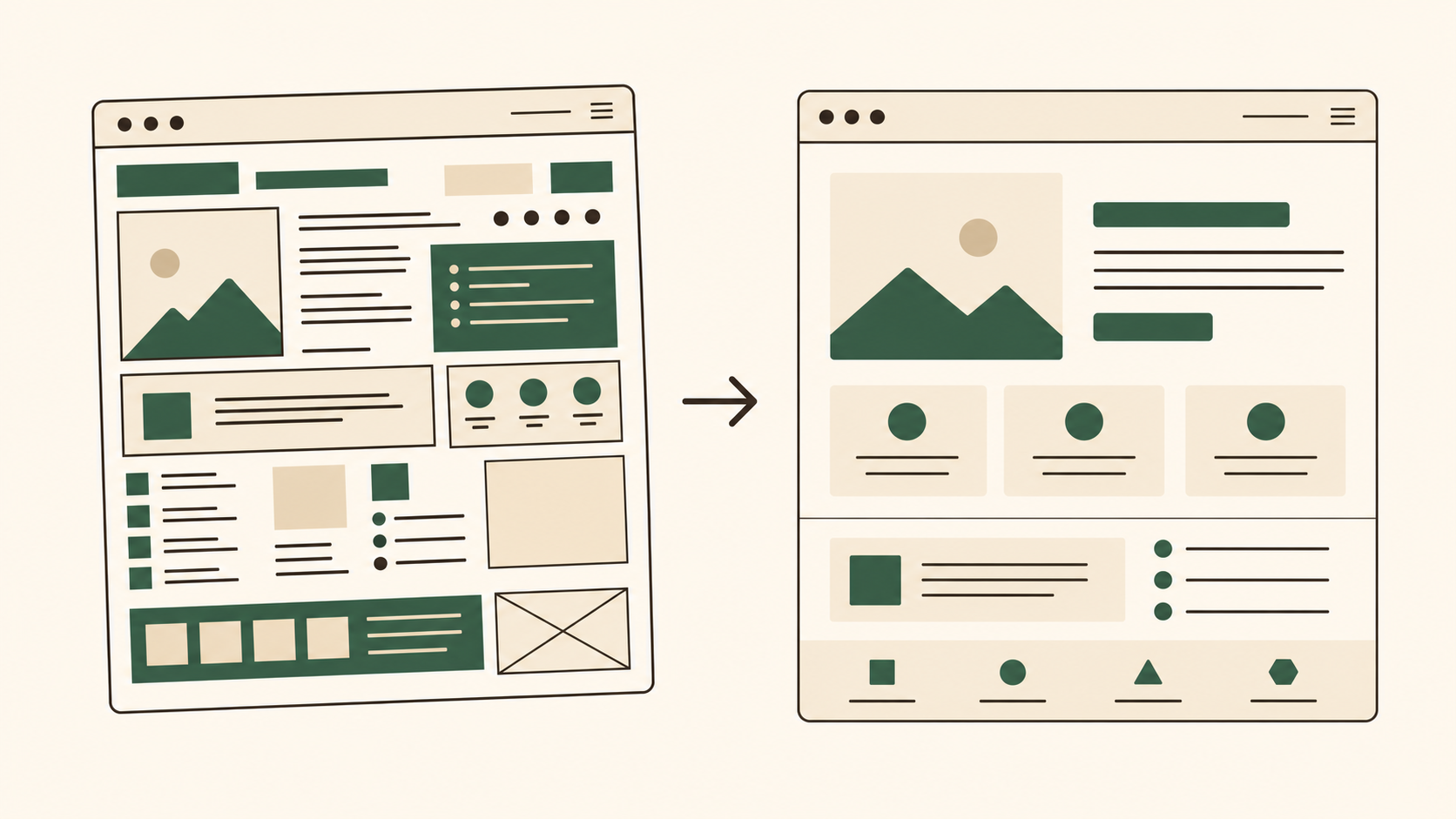
On this page
You might not need a full redesign. That's not what most companies selling website redesign services will tell you, but it's the honest place to start. Some sites need a rebuild. Plenty just need a few things fixed. Before you spend money redoing everything, it's worth knowing which one you're looking at — and what a redesign should actually get you when you do it.
Here's the straight version, from people who build and look after websites for a living.
First, do you actually need a redesign?
A redesign is the right call when the problems are baked into the site itself. A few signs:
- People can't find you on Google. If you don't show up when someone searches for what you do, a fresh coat of paint won't fix it — the way the site is built has to change.
- It looks wrong on phones. Most people who reach your site are on a phone. If they have to pinch and zoom to read it, they leave.
- It's slow. A site that takes its time loading loses people before they ever see what you offer.
- You'd hesitate to share the link. If the site embarrasses you a little, it's saying something to your customers too.
- It brings in nothing. Visitors come, and no calls, forms, or messages follow.
If that sounds like your site, a redesign earns its keep.
But some things aren't a redesign at all. Outdated hours, a missing page, copy that no longer fits, a contact form that needs work — those are fixes, and a good fix costs a fraction of a rebuild. The honest move is to tell the two apart before you pay for the bigger job.
Takeaway: A redesign is the answer to some problems, not all of them. Knowing which is which saves you money.
What a redesign should actually get you
Here's where a lot of redesigns go sideways: they chase a new look and stop there. A prettier site that doesn't bring in more business is just decoration. The job of a redesign isn't a paint color — it's a handful of concrete outcomes.
It gets you found. The site has to be built so Google can read it and show it to the people already searching for what you do.
It works on phones. Around 60% of all website visits now come from a phone, so the phone version isn't the afterthought — it's the main event.
It loads fast. Speed is quietly one of the biggest things a redesign can fix. The BBC found it lost an extra 10% of its visitors for every additional second its site took to load — real customers gone before they ever see what you offer.
It earns trust in a glance. People size up a site fast, and Stanford's web-credibility research found they lean on how it looks to decide whether to trust it. A site that looks looked-after makes the call feel safe to make.
Add those up and they point one direction: more calls. That's the real measure of website redesign services — not how the site looks in a screenshot, but whether the phone rings more after it's live.
Takeaway: A redesign that doesn't get you more business is just decoration. Ask what it's going to do, not only how it'll look.
Where small-business redesigns go wrong
When a redesign disappoints, it's rarely because the design was bad. It's usually one of these:
- The freelancer disappears. The site gets built, the invoice gets paid, and then something breaks and nobody answers. A website isn't a one-time project — it needs someone around after launch.
- The DIY rebuild still can't be found. Plenty of owners rebuild it themselves on a website builder, end up with something that looks fine, and still don't show up on Google or bring in work. Looking fine and working are different things.
- Big spend, no plan. Money goes in, a nice-looking site comes out, and nobody ever decided what the site was supposed to do. Without that, you can't tell whether it worked.
The thread through all three is accountability. A redesign works when one person is responsible for it — not just for building it, but for it doing its job, and for still being there when you have a question six months later.
Takeaway: Most redesigns fail on accountability, not on looks. The people who stick around are worth more than the ones who wow you up front.
What it's like to have us do it
You shouldn't have to project-manage your own website. So with us, you don't.
You tell us what your business needs and what isn't working. We handle the rest — the design, the words, the way it's built so Google can find it, the way it behaves on a phone. We tell you honestly how long it'll take, and we don't pretend a good site happens overnight. A real person is responsible for everything that goes live, and that same person is still here after it does.
When it's ready, you look it over and approve it. We launch it. Then we keep looking after it, so it stays fast, current, and working while you get back to running your business.
That's the whole idea: your website, handled.
Sources
- Share of web traffic that comes from phones — StatCounter Global Stats: Desktop vs Mobile Market Share Worldwide.
- Page speed and lost visitors (the BBC figure) — web.dev: Why speed matters, from Google.
- Website design and credibility — Stanford Web Credibility Research: Guidelines.
Keep reading
How Much Does a Website Cost? An Honest Breakdown
How much does a website cost? An honest look at the real ranges, what actually drives the price, and why the cheapest build usually costs the most over time.
Small Business Website Design: What You Get and How to Choose
What a good small-business website should actually include, what "good design" really means, and how to pick someone to build it without getting burned.